Building deep cleaning in Aberdeen and Aberdeenshire
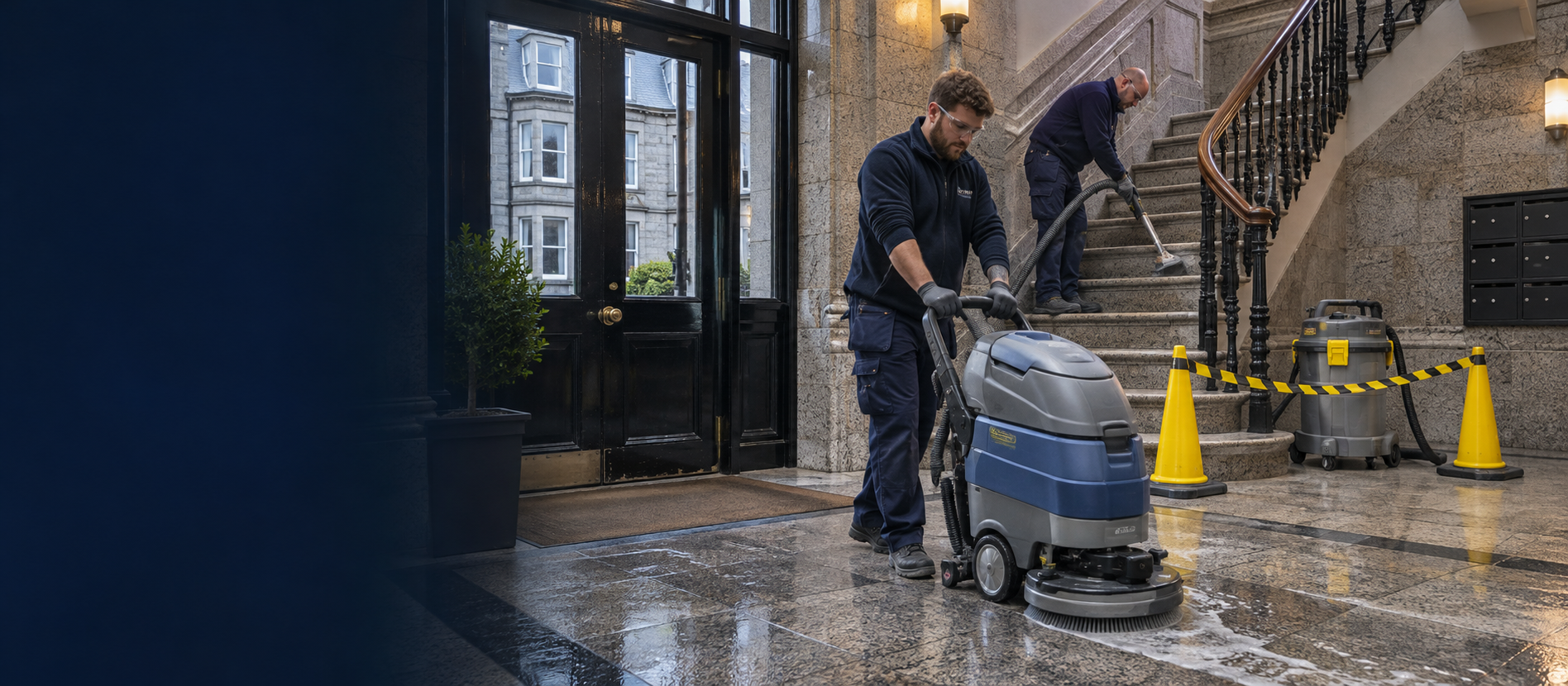
Residents and visitors see a building's entrance every day, but the condition of its stairs, lifts, handrails and service corners depends on the work behind the scenes. Nova Clean Aberdeen discusses building deep cleaning for managed residential blocks, mixed-use premises and commercial properties across Aberdeen and Aberdeenshire. A detailed one-off visit may be needed after refurbishment, a period of neglected maintenance, water ingress or a change in management. We define the shared areas, materials, access and responsibility before work is booked.
Common parts are not the same as private flats or individual offices. A factor, landlord or facilities manager may need to approve work, notify occupants and arrange keys. The cleaning scope should name each entrance, stairwell, lift, corridor, bin store or ancillary space rather than referring to the entire building without limits. We ask for floor plans, photographs and the operating hours of the property. A useful proposal says which areas remain in use during the clean and how people can pass safely.
Survey shared spaces and identify the source of soil
Dust at upper ledges, grit at entrances, fingerprints on lift panels and marks on stair treads need different methods. A building near road traffic or the coast may accumulate deposits faster, while a recent renovation can leave fine construction dust throughout several levels. We ask whether there are leaks, damaged finishes, pest activity or heavy waste, because cleaning alone may be inappropriate until the source is addressed. The survey should distinguish removable soil from broken surfaces and maintenance defects.
Older granite tenements can have stone steps, timber handrails, decorative tiles and painted walls in close proximity. Newer apartment blocks may have glass, stainless steel, resin floors and electronic access systems. We do not use a single product or machine everywhere. A small test on a sensitive finish can help avoid a pale patch or damaged coating.
Entrances, stairs and lift lobbies
Entrance mats, thresholds and lower walls collect the material carried in on shoes and wheels. Grit should be removed before damp treatment to reduce abrasion. Stair treads and landings require attention to edges, nosings and drying time; a wet stair is a serious access concern. Work can be staged so an alternative route remains available, with signs or barriers agreed with the manager. A narrow stair may need hand equipment rather than a large machine.
Lift panels, doors and mirrors show fingerprints but may contain sensitive electronics or finishes. We clean only accessible surfaces with compatible controlled application, avoiding liquid entering controls or door tracks. A fault in a lift or access system belongs to the maintenance provider. We ask the manager whether any lift can be taken out of service during cleaning and how mobility needs will be accommodated.
Corridors, high surfaces and hidden dust
Long corridors can appear clean at eye level while skirtings, vents, radiator tops, light covers and door frames hold fine dust. A detailed clean moves methodically from higher reachable surfaces down to floors. High-level work needs safe access and may not be included in a standard one-off quotation. We name those areas separately. Fire doors, alarms, extinguishers and emergency signage should remain unobstructed; cleaners should not dismantle safety equipment to reach behind it.
If building works are still in progress, schedule the final clean after the dusty trades leave. Our after builders cleaning service deals with construction residue and newly finished surfaces. A building with several contractors may benefit from a staged rough clean followed by a final handover clean, with each pass defined in the scope.
Bin stores and service areas
A bin store can contain spilled waste, odour and damaged containers. The manager should say who is responsible for moving bins and where waste can be placed. We do not assume permission to dispose of residents' belongings or bulky fly-tipping. The volume, contamination and access route can change the method. A deep clean may include accessible floors, lower walls and handles after the space has been cleared, with runoff and drainage assessed first.
Plant rooms and meter cupboards may be restricted. The presence of electrical equipment, pipework or stored materials means access should be authorised and the cleaning method limited accordingly. We do not operate or repair building systems. If a room contains sharps, suspected asbestos or extensive biological contamination, a separate hazard assessment is needed before ordinary cleaning proceeds.
Managing occupants during the work
Residents may still need to reach their homes, deliveries may arrive and visitors may use the entrance. The factor or manager can provide notice of the schedule and identify a contact for questions. We plan zones so people are not directed through wet floors or equipment. A team should know which doors must remain unlocked and which areas are private. Cleaning staff should not enter flats without the owner's authority merely because a corridor is being treated.
For a commercial building, access may require security passes, induction and coordination with tenants. We ask about noise restrictions and whether water and power can be used. The written plan can record the order of floors, temporary closures, waste route and handover check. A clear plan reduces disruption and makes it easier to review the result.
Floors and finishes across a mixed building
Stone, tile, vinyl, carpet and sealed timber may be present within a few metres. Machine pressure, moisture and chemistry must match each finish. A worn coating will not be restored simply by washing; marble may need a separate stone polishing assessment. Fitted carpet with embedded soil may require carpet cleaning and an appropriate drying period. We separate these tasks so the manager can decide priorities and budgets.
Window cleaning in common stairwells can also require high access and may be another scope. The window cleaning service describes the questions around glazing, frames and people below. We do not imply that high windows are included just because the nearby corridor is being cleaned.
Handover, records and maintenance
At completion, compare the agreed list of areas with what was treated. The team can report inaccessible spaces and visible defects, such as a leaking pipe or damaged floor, for the manager to assess. Cleaning cannot repair those faults or guarantee that recurring damp will disappear. Photographs of representative areas can document a one-off result. The manager can then decide which routine tasks will preserve the condition and how often to inspect high-use points.
A deep clean is not automatically a daily maintenance contract. We discuss a one-off intervention and any future schedule as distinct decisions. Traffic, weather, resident use and ongoing building work affect how long the result lasts. The goal is a clear, practical scope rather than a promise that every surface will remain spotless.
Separate an initial deep clean from routine maintenance
A building that has gone months without detailed attention may need more than an ordinary weekly visit. We identify accumulated grime on skirtings, corners, handrails, lift tracks, door frames and high-level ledges before suggesting a frequency for routine care. The first visit can be staged to restore a practical baseline, after which a smaller maintenance schedule may be suitable. This distinction helps a factor or managing agent compare quotations fairly. A low routine price should not conceal the time needed to address old deposits at the start.
We ask for any existing cleaning specification and recent complaints, but we do not assume every complaint is a cleaning defect. Water marks may come from a leak; damaged paint may need repair; persistent odour in a bin store can depend on ventilation and waste handling. The scope should identify what cleaning can change and which building issues require another trade or management action. Photographs and a walk-through with the responsible contact make those boundaries clearer.
Design a safe route for residents and deliveries
Shared stairs and corridors are circulation routes, not empty workrooms. We agree how residents, visitors, carers and deliveries can pass while an area is being cleaned. Wet floors need suitable signs and a method that does not leave a slip hazard. Equipment and cables should not block fire exits or accessible routes. In a block with several entrances, a phased programme can keep one route available while another is treated. The building contact should notify occupants where access or noise will change for a period.
Lift lobbies need particular care because people may step out directly onto a freshly treated surface. We discuss lift use, thresholds and whether a lift can be taken out of service briefly. Door controls, entry systems and intercoms should not be saturated. If the building has security rules, the team needs the correct access procedure and a contact who can resolve a locked area. A reliable handover notes any space that remained inaccessible rather than quietly leaving it out of the result.
Plan cleaning for mixed materials in one block
A single building may combine granite steps, vinyl corridors, carpeted landings, painted metal doors and timber handrails. Each material needs a compatible method. Grit can be lifted from a hard entrance before it is carried onto carpet. A stone floor may show mineral deposits while a carpet holds embedded soil. We map the surfaces and agree whether specialist carpet cleaning or stone restoration is included. A general deep clean should not imply refinishing or repair.
High-level areas can require more access planning than the floor beneath them. Light fittings, ceiling corners and tall glazing may be unreachable from ordinary steps. We ask whether the building can accommodate safe access equipment and who will isolate the area. If a fitting is fragile or needs electrical work, that activity remains outside cleaning. The proposal should distinguish reachable high-level dusting from a separate specialist visit.
Bin stores, plant rooms and contamination boundaries
A bin area may contain ordinary waste residue, spilled liquids, pest activity or discarded sharp objects. Before staff enter, the manager should describe any known hazards and arrange removal of loose waste where that is the building's responsibility. We plan collection, suitable protective measures, cleaning and drainage with the actual condition in mind. A heavily contaminated store may need a separate quotation. The team should not move unknown chemicals or enter restricted plant equipment spaces without a clear authorisation and safe method.
Plant rooms and service corridors may house electrical distribution, heating equipment and communications hardware. Their surfaces can be dusty, but water or chemicals near equipment can be inappropriate. We ask which areas the facilities manager permits us to touch and whether an engineer must attend. Cleaning of a room does not include maintenance of machinery or a declaration that the space is technically safe. Boundaries like these protect both the operator and the occupants.
Use photographs and an agreed inspection to close the job
For a large block, a room-by-room or floor-by-floor record can help the manager confirm the scope. Before photographs document persistent marks and damaged finishes; after photographs can show reachable areas treated and reveal places that need repair or further access. These records should respect residents' privacy and avoid photographing personal possessions unnecessarily. A named contact can review representative areas, especially entrances and high-traffic floors, before equipment is removed.
Maintenance advice should be practical. Suitable entry matting and a clear waste routine can reduce soil returning immediately, while a regular cleaning frequency can be adjusted after observing use. Aberdeen's wet and windy weather makes entrance grit and water especially variable. We can describe the next sensible interval without presenting a single schedule as universal. The final handover should say what was done, what remained outside scope and any condition that may need attention from the building manager.
Aberdeen and nearby towns
We discuss tenements and managed blocks in Aberdeen city centre, Rosemount, Ferryhill, Torry and Old Aberdeen, as well as newer buildings in Bridge of Don, Dyce, Cove Bay and Westhill. Enquiries in Portlethen, Stonehaven and Inverurie are considered by exact postcode and access. Send the building type, number of levels, areas to include, floor materials, photographs, available hours and the person authorised to approve work.
Call 0845 52 805 20, email