House and flat deep cleaning in Aberdeen and Aberdeenshire
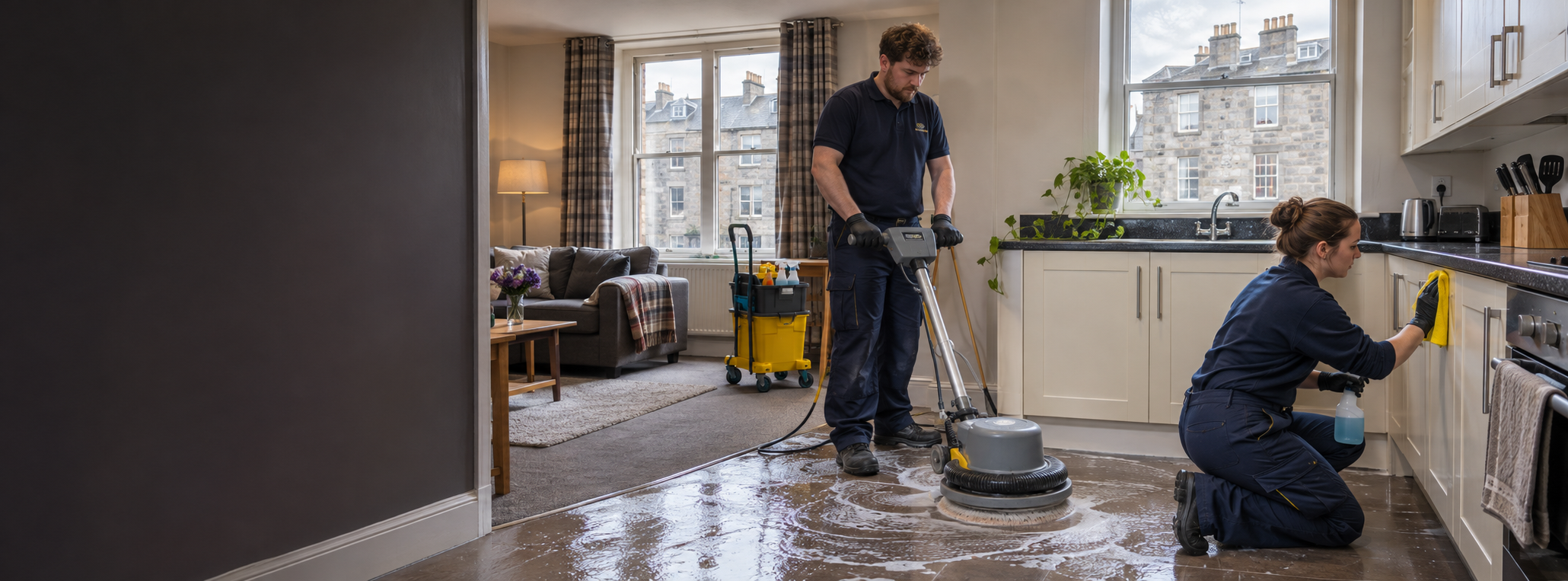
Detailed cleaning for Aberdeen homes beyond a routine visit
A house or flat deep clean starts with the actual condition of the rooms, the materials within them and the result the occupier needs. A tenement apartment in Rosemount after a long vacancy, a family house in Cults before a move and a rented property in Torry with persistent kitchen grease should not receive an identical checklist. Nova Clean Aberdeen discusses one-off deep cleaning with owners, tenants, landlords and property managers throughout Aberdeen and Aberdeenshire. We ask which surfaces need attention, whether furniture remains in place, when the premises must be ready and whether repairs, clearance or specialist disinfection are also involved.
Routine maintenance usually concentrates on accessible visible areas. A detailed intervention can include the inside of empty cupboards, appliance surrounds, reachable high surfaces, skirting boards, door frames, sanitary fittings and stubborn but treatable deposits. The quotation must specify exactly which of these tasks are included. Some surfaces may be damaged or permanently stained; cleaning cannot restore worn sealant, cracked grout or a failed finish. We explain such limits during assessment and choose a method that respects the substrate rather than promising a uniform result in every room.
Assessment, access and preparation before a deep clean
Please give the full postcode, type of dwelling, approximate floor area, number of rooms and bathrooms, current occupancy and the date by which work is required. Photographs of the kitchen, bathrooms and other difficult areas can help with initial planning. Tell us about pets, fragile ornaments, valuable finishes and any area that must remain untouched. In an apartment building, stair access, lift availability, parking and permitted working hours can affect the plan. A home in Banchory or Stonehaven may require different travel and loading arrangements from a city-centre flat.
We agree whether belongings will be put away by the occupant before arrival. Technicians can move light, agreed items to reach surfaces, but a deep clean does not automatically include sorting possessions, dismantling furniture or moving large appliances. If the home is heavily cluttered, a staged clearance may be needed first. If there is an active leak, unsafe electrical installation, extensive mould or biological contamination, a different assessment is necessary. Discuss these conditions before booking so suitable equipment and protections can be considered.
Kitchen grease, food residues and accessible appliances
Domestic kitchens accumulate deposits around cooking equipment, cupboard handles, splashbacks and ventilation points. We begin by identifying the material: laminate, painted timber, natural stone, stainless steel and glass each tolerate different products and contact times. Degreasing is more effective when loose residue has been removed and surfaces are treated in a controlled sequence. We can discuss the outside of an oven, hob, extractor cover and accessible appliance edges, and specify whether interiors are included. An old or damaged coating may not withstand aggressive scrubbing, so a test area can be sensible.
Cleaning behind a cooker or fridge depends on whether the appliance can be safely moved and whether disconnection is necessary. We do not include work inside electrical systems or extraction ducts in a domestic deep-cleaning proposal. Cupboards can be cleaned internally when they are emptied beforehand, while contents left in place may limit the result. Food-contact surfaces need suitable methods and a clear handover. Persistent odour should be investigated at its source, including bins, drains or damp materials, rather than covered with a strong fragrance.
Bathrooms, limescale and moisture-prone surfaces
Bathrooms may show soap deposits, scale, staining and mildew in joints. We distinguish removable surface soil from failed grout, worn sealant and water damage. Ceramic tiles, enamel, chrome, acrylic and natural stone cannot all be treated with the same acidic cleaner. We assess the condition of taps, shower screens, trays, toilets and accessible ventilation grilles before choosing products and tools. Where a surface is delicate, the priority is to clean without etching or scratching it even if some old mineral staining remains.
Black marks recurring around a shower can indicate an underlying moisture problem or deteriorated sealant. A one-off clean cannot fix a leak or persistent condensation. If mould extends across walls, behind furniture or into building materials, the customer may need a separate moisture investigation. We describe any excluded areas and avoid describing a bathroom as fully remediated when the cause of damp remains. For occupied homes, we also agree when the bathroom can be used again after treatment.
Bedrooms, reception rooms and fine dust on finishes
Cleaning living areas means working from high reachable surfaces down to floors, while preventing dust from resettling on freshly treated surfaces. We examine picture rails, window ledges, light switches, skirting, door edges and the spaces that ordinary visits miss. Polished timber, painted joinery, upholstery and electronics require restraint. A damp cloth suitable for a sealed surface may damage unsealed wood or a delicate finish. We ask before moving personal papers or ornaments and identify the surfaces a technician can safely reach without specialist access equipment.
A deep clean may include accessible internal glazing and frames, but external windows, chandeliers, upholstery extraction and carpet treatment are separate tasks unless written into the proposal. These can be added after assessing height, material and condition. If the property contains recent building dust, the sequence differs from an ordinary domestic clean: repeated controlled dust extraction and protection of new finishes may be required. A heavily soiled carpet may require a textile-specific process and drying time, not simply more passes with a standard vacuum.
Floors, carpets and material-sensitive treatments
Aberdeen properties contain granite thresholds, timber boards, laminate, vinyl, tiles and carpets. We identify the material and any coating before selecting a cleaning method. Water used on a sealed ceramic floor may damage an old timber floor or enter loose laminate joints. Abrasive pads can dull polished stone; strong chemicals can discolour grout or flooring adhesives. We test where needed and explain the difference between cleaning and restoration. Sanding, polishing, seal replacement and repairs require separate specialist arrangements.
For carpets and rugs, we ask about fibre, construction, staining, previous treatments and the time available for drying. Furniture left in place limits full coverage. A delicate rug may need off-site specialist care rather than treatment on the floor. Where a stain has chemically changed the fibre or dye, extraction may reduce soil without reversing the mark. A useful quotation distinguishes vacuuming, spot treatment and full wet extraction so that the customer knows which service to expect.
Build a room-by-room plan before a long cleaning day
A useful deep clean begins with a walk-through or a detailed description of the home. We ask for the number of rooms, floor area, surfaces, access to water and power, and the condition that makes an ordinary visit insufficient. An occupied flat with fragile belongings needs a different sequence from an empty house about to be sold. The owner can identify priority rooms, items that must not move and areas where privacy matters. A written checklist helps everyone understand whether internal cupboards, reachable appliances, windows and exterior spaces are included.
We usually work from high and less soiled surfaces toward lower areas, with bathrooms and kitchens receiving methods suited to their deposits. Loose dust should be removed before wet wiping so it is not spread into corners. Cleaning can reveal worn grout, damaged sealant or permanent marks that were hidden by soil. These are maintenance issues, not proof that a cleaner has missed the surface. We note them during a handover so the owner can arrange the right repair.
Respect the materials in older and newer homes
Aberdeen properties can combine granite thresholds, painted timber, modern laminate, natural stone, vinyl and delicate wall finishes. A strong product used indiscriminately can damage a coating. We assess surface type and test an unobtrusive area when its condition is uncertain. A textured tile may hold soil differently from a polished finish, while a timber floor requires moisture control. We ask about recent renovations, manufacturer instructions and previous treatments. If a surface needs restoration rather than cleaning, we describe that distinction rather than promise a result beyond a deep clean.
Dust can settle on high ledges, behind radiators and along skirting boards. Access may be blocked by furniture or stored belongings. We agree who moves heavy items and how they will be protected. It is usually more efficient for the household to clear small personal objects before the visit so the team can focus on cleaning. We do not open sealed boxes, sort confidential papers or discard possessions without clear authorisation. The scope should make those boundaries visible.
Plan for pets, children and occupied rooms
When people remain at home, the work can be staged so there is a safe room to use. Wet floors, cables and cleaning equipment must not block essential routes. We ask about pets, mobility needs and any rooms that cannot be entered at certain times. Ventilation and drying vary with weather and building condition. The team should explain when a treated surface can be used again, particularly after floor or textile work. A family may prefer a short sequence over several visits rather than a single disruptive day.
In a vacant property, keys, alarms and parking access become important. We agree who will let the team in, how photographs may be used and who will inspect the result. If utilities are off, some methods may not be possible. A property that is still receiving trades or deliveries may need cleaning only after that activity has ended, followed by a final check before handover. Otherwise fresh dust can settle on completed rooms.
Set realistic expectations for stains and odours
Every visible mark is not removable soil. Limescale can etch a fitting, cooking grease can penetrate porous material, and old spills may change textile colour. We ask what caused the problem and which products have already been tried. A controlled test may show whether further treatment is worthwhile. Odours can come from waste, damp materials, ventilation or a source beneath flooring. Surface cleaning alone may not resolve a concealed cause. A proposal should separate ordinary deep cleaning from specialist hoarding cleaning, water damage cleaning or other interventions where conditions require them.
We also avoid overstating disinfection. A clean looking room and a microbiologically assessed area are not the same. If a client asks for a particular disinfectant process, we need to know the reason, affected material and any relevant instructions. The method and limits should be specified rather than treated as a routine extra applied everywhere. This is especially important where vulnerable occupants or contaminated materials are involved.
A clear quotation and inspection make the result measurable
Send photographs of representative rooms and the areas of concern, not just the tidiest corner. The quotation can list included rooms, accessible fixtures, appliance interiors if agreed, floors, windows, waste handling and any special treatment. It should state whether materials and equipment are included and what preparation the household must complete. A fixed price may require a survey if the condition is unusually heavy or poorly documented.
At completion, the owner or managing agent can inspect agreed priority areas in ordinary light. A handover note should mention inaccessible spaces, persistent stains and any maintenance concern discovered during work. If a room requires another specialist service, the next step can be discussed without suggesting that the original cleaning included it. A realistic deep clean gives the household a more usable baseline and an understandable plan for keeping it that way.
Planning the clean around occupancy and handover
Some customers remain in their homes during the work, while others need a vacant property ready for a family move, inspection or sale. We agree access to water and electricity, a safe place for equipment, any room that must remain usable and the order of treatment. An occupied home may be cleaned in stages to minimise disruption. For a vacant property, a final walkthrough can identify areas that could not be reached or marks that are permanent. A written scope can prevent confusion when several people share responsibility for the handover.
We do not quote a universal price per bedroom because condition, floor area, material and access determine the work. Send the property details and photographs where appropriate, then we can discuss whether a visit is needed. Availability is confirmed individually for Bridge of Don, Dyce, Westhill, Portlethen, Inverurie, Ellon and other Aberdeenshire locations. Call 0845 52 805 20 or email