End of tenancy cleaning in Aberdeen and Aberdeenshire
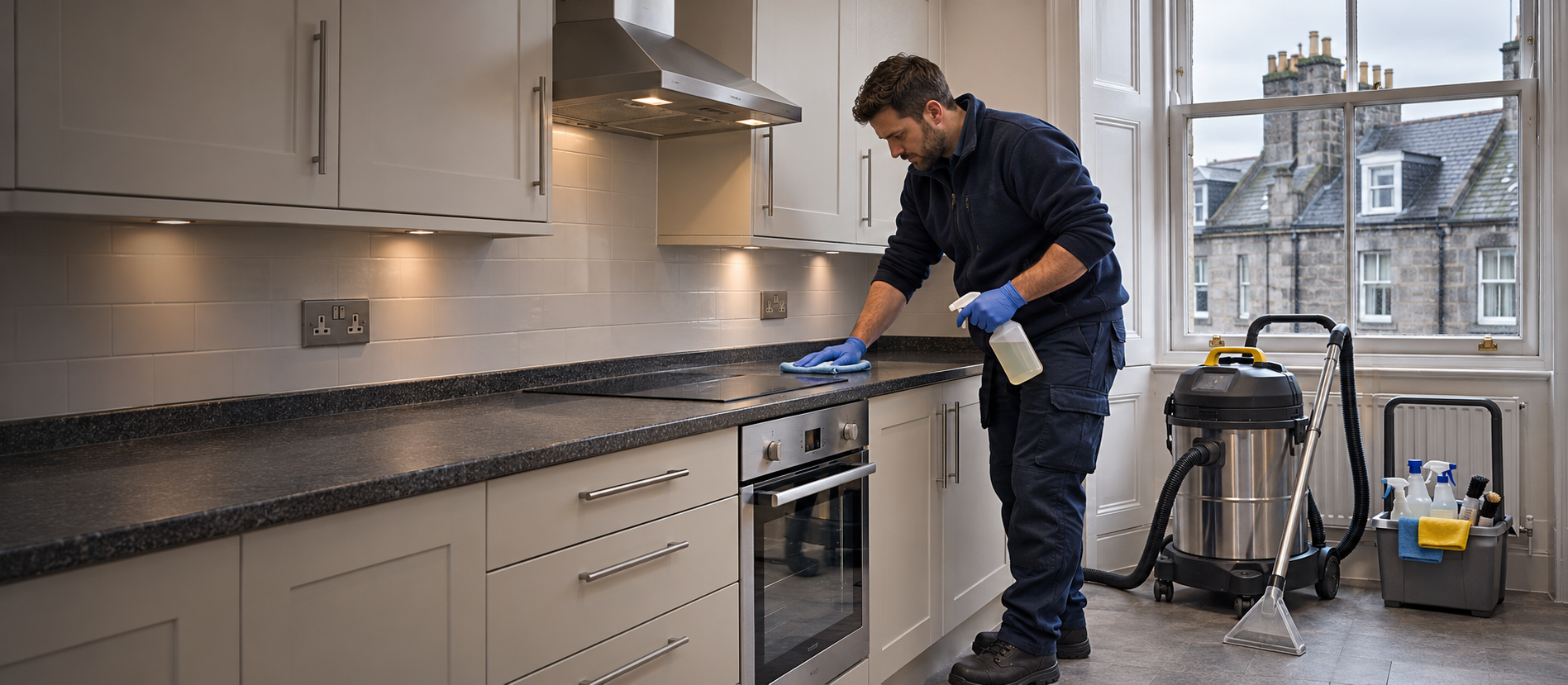
Moving out of a property is rarely a simple matter of emptying the cupboards and running a vacuum over the floor. A tenancy handover involves the condition recorded at the start of the let, the actual state of the rooms after occupation, the landlord or agent's inventory, and the practical limits of the time available before keys are returned. Nova Clean Aberdeen provides detailed end of tenancy cleaning for flats and houses in the city and across nearby Aberdeenshire. We discuss the property, the agreed handover standard and the work that is reasonably possible before setting a clear scope for a quotation.
Our work can support tenants preparing to leave, landlords between occupancies, letting agents arranging a rapid changeover and relocation managers handling several properties. We cover enquiries in the city centre, Rosemount, Ferryhill, Torry, Old Aberdeen, Bridge of Don, Dyce, Cove Bay and Cults, as well as Westhill, Portlethen, Stonehaven, Inverurie and other locations subject to availability. A granite tenement flat with sash windows presents different access and material questions from a modern apartment with integrated appliances, so a useful estimate begins with the actual rooms rather than a generic list.
Agree the handover standard before cleaning begins
In Scotland, the starting inventory and the property's original condition are central to a fair assessment of the end condition, allowing for ordinary use over the tenancy. Cleaning does not replace repairs, resolve a dispute about damage or guarantee any particular deposit outcome. It does, however, help present the property in a documented, inspectable state. If an agent has supplied a checklist or photographs of areas that need attention, share them with us before work is booked. We can then identify accessible surfaces, any specialist tasks and anything that falls outside normal cleaning.
Tell us whether the property will be completely vacant, whether utilities will remain connected, who holds the keys, and when the inspection is scheduled. Cleaning an occupied kitchen while belongings are still being packed is less efficient and may leave areas behind furniture inaccessible. Emptying cupboards and removing rubbish before arrival allows the team to focus on the surfaces that matter. If you need clearance as well as cleaning, ask for that to be priced separately and consult our house clearance and decluttering service. We will not dispose of possessions without an agreed instruction.
Kitchen cleaning from visible surfaces to overlooked edges
Kitchens collect grease, food residue and fine dust in places that routine wiping misses. A practical handover clean can include accessible worktops, cupboard doors, drawer fronts, handles, splashbacks, sinks, taps, tiles, skirting and floor edges. When cupboards are empty, their interiors and shelves can be wiped and dried. Marks on cabinet finishes must be treated with products compatible with paint, laminate, veneer or natural stone. Excessive water near joints can swell panels, while abrasive pads can permanently dull stainless steel or glossy doors.
Ovens, hobs, cooker hoods, fridges and freezers are frequent points of disagreement because their condition is easy to photograph. We ask which appliances are included, whether they can be switched off and safely accessed, and whether an oven clean is required. A heavily carbonised oven or grease-laden extraction component may need a distinct specialist allowance. A refrigerator should be emptied and defrosted by the occupant before cleaning, with enough time for ice to melt without damaging seals or electrical parts. Food waste should be removed before the visit. An appliance fault or staining within damaged enamel is not something a cleaning team can reverse.
In older Aberdeen flats, narrow kitchen layouts and fixed units can make the spaces behind appliances inaccessible without disconnection or moving heavy equipment. We identify these boundaries beforehand. Cleaning accessible fronts and edges is different from disconnecting gas or electrical appliances, which is outside an ordinary cleaning appointment. Any proposed movement should be agreed with the person responsible for the property.
Bathrooms, sanitary fittings and moisture-prone surfaces
A bathroom handover typically calls for cleaning of basins, taps, shower screens, baths, toilets, accessible tile surfaces, mirrors, fittings and floors. Limescale, soap deposits and mould staining respond to different treatment. We select products after checking whether the surface is ceramic, acrylic, plated metal, natural stone or a coated screen. Acidic descalers can harm certain stone and metal finishes, while excessive scraping can scratch a screen. Old silicone with deep staining may need replacement by a tradesperson after cleaning, and damaged grout may need repair.
A persistent damp smell or recurrent mould should be reported rather than hidden under fragrance. Condensation, leaks and inadequate ventilation can cause growth to return after a surface is cleaned. The underlying moisture issue belongs in a separate inspection and repair plan. If there has been a recent leak or flood, our water damage cleaning guidance explains the importance of identifying the water source and completing drying before final cleaning.
Rooms, internal surfaces and floor care
Bedrooms, living areas and hallways should be approached systematically from higher reachable surfaces down to skirtings and floors. Empty wardrobes, shelves, switches, door frames, radiators, internal glass and accessible window ledges may all need attention. We assess the condition of painted walls before treating marks: a fragile matte finish can lift or become patchy if scrubbed, and a mark caused by impact is a repair issue. We will not promise to remove every stain from a worn material.
Flooring varies widely between Aberdeen rentals. A sealed hard floor may be vacuumed and damp cleaned with a compatible solution, while wood and laminate require careful control of moisture. A carpet with embedded soil, staining or odour may need extraction after a fibre and colourfastness assessment. Routine vacuuming and professional carpet treatment are distinct scopes; if the inventory specifies a carpet standard, tell us which rooms are involved. Historic stains, worn pile and dye migration can limit the result. Stairs and landings can also need more time than the floor area suggests, particularly in a tenement with restricted access.
Windows are another item to define precisely. Internal glazing, frames and sills may be included where safely reachable, whereas exterior windows, high glazing and communal stair windows require their own access assessment. We do not assume that a tenant is responsible for communal areas managed by a factor or landlord. Likewise, a balcony, private terrace, garage or shed is included only when agreed.
Arranging a safe and efficient appointment
We ask for the number of bedrooms and bathrooms, the approximate floor area, the property type, parking or loading arrangements, floor level and lift access. Photos of the kitchen, bathrooms and any unusual marks help define the likely work. Let us know if the flat has been empty for months, if there are pets, if rubbish remains or if the property has been affected by smoke, pests or water. These conditions can change the safety plan and may require a deeper clean or a specialist service rather than a standard turnover appointment.
On the day, provide working water and power, a secure way to enter and clear access to the areas to be cleaned. We agree how keys will be collected and returned, whether someone will be present, and how completed work can be checked. A written scope can distinguish included rooms and appliances from excluded repairs, waste disposal, high-level access and specialist stain treatment. This prevents a broad phrase such as full clean from concealing important differences in expectations.
After builders work needs separate planning. Fine plaster dust and residue from trades can settle inside ventilation grilles, on joinery and on finished floors. If a property is being let immediately after refurbishment, describe the work completed and when the trades will leave. A final clean should follow the last dusty task; otherwise a new deposit of dust may appear after the cleaners have finished. Newly painted or sealed surfaces may also have curing instructions that govern what can be applied.
Timing, quotations and handover checks
Cleaning duration depends on condition, access, number of rooms and the agreed level of detail, not only square metres. A lightly used one bedroom flat may need a very different team and schedule from a family house with multiple bathrooms, pets and a neglected oven. We can discuss dates against your key return deadline, but availability is confirmed for each booking. Where photographs do not reveal the real condition, a site assessment or a quotation with clearly stated assumptions may be appropriate.
Before leaving, compare the agreed scope with the work completed and take dated photographs for your own records. Keep the inventory, any agent instructions and relevant correspondence together. If a landlord requests work beyond the original handover condition or points to a maintenance problem, distinguish that question from the cleaning itself. We can explain the work we carried out and any inaccessible or damaged areas we observed, while decisions about tenancy obligations remain with the parties and their appointed advisers.
Use the inventory as a practical starting point
A tenancy handover is easier to plan when the check-in inventory, photographs and any landlord instructions are available. They show which appliances, fittings and outdoor areas belong to the rented property. We ask whether the home is empty, whether keys will be handed back on the same day and whether repairs or removals are still scheduled. Cleaning should follow the removal of personal contents and most trade work, or dust and marks can return before inspection. The quotation can list each room and any agreed extras so that tenant, agent and cleaner share the same scope.
Wear and damage should be distinguished from removable soil. A stained sealant line, scratched hob or faded carpet may not be restored by cleaning. We can record these conditions, but do not promise that a deposit decision will follow from a particular clean. That decision depends on the tenancy terms, starting condition and assessment by the relevant parties. A clear handover note helps identify what was cleaned and what remains maintenance or repair.
Prepare appliances and storage for accessible detailing
An oven, fridge and washing machine may each need different preparation. The tenant or owner should confirm which appliances are included, whether they can be safely isolated and whether food has been removed. We do not pull a heavy built-in unit from its housing without agreement and appropriate access. Cupboards and drawers should be empty if their interiors are to be treated. The team can then work through accessible edges, shelves, handles and splash areas without moving personal belongings.
Bathrooms may retain mineral deposits despite repeated ordinary wiping. We assess the surface before choosing a descaling method, especially around natural stone, plated fittings and old grout. Persistent black marks in sealant can reflect deterioration that needs replacement rather than stronger cleaning. If dampness or a leak is active, the source should be addressed before a final cosmetic handover.
Coordinate keys, photos and the final inspection
For an Aberdeen flat in a shared building, parking, stair access and lift rules can affect the workday. We ask who will provide keys, what time utilities remain available and where waste may be placed. The client should identify any loft, cellar, balcony or garage included in the tenancy. A final walkthrough in good light can check the agreed rooms, while photographs can record areas that could not be accessed or marks that remained after suitable treatment.
If a carpet needs a separate carpet cleaning process or a balcony requires drainage-controlled washing, those tasks should be scheduled with enough drying time before keys are returned. A realistic programme allows the property to be inspected safely and avoids promising that every specialist treatment can be completed in the last hour before handover.
Cleaning across Aberdeen and the surrounding towns
City centre properties around Union Street and the Merchant Quarter may have limited loading windows, shared stairs and controlled parking. Rosemount and Ferryhill can include older layouts with delicate joinery and high ceilings. Newer homes at Bridge of Don, Cove Bay, Dyce and Westhill often have different flooring and appliance combinations. In Portlethen, Stonehaven and Inverurie, travel time and access arrangements need to be included in the plan. Tell us the exact postcode so we can confirm whether a team can attend and when.
For a practical quotation, send your postcode, preferred date, property size, room count, appliance list, photos of areas requiring special attention and the handover checklist if available. Call 0845 52 805 20, email