Office cleaning in Aberdeen and Aberdeenshire
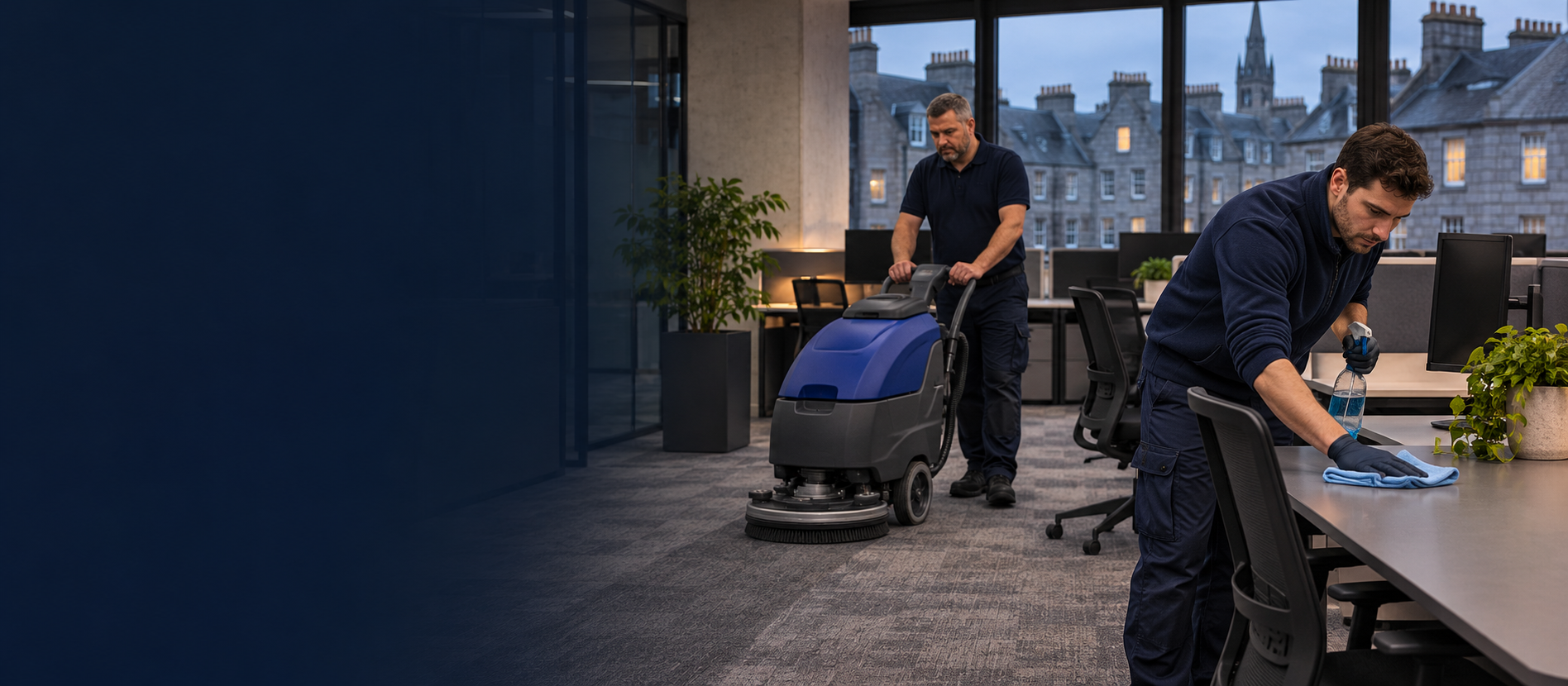
An office looks orderly when desks are clear, yet the condition of its floors, shared equipment, meeting rooms and welfare areas tells a more useful story. Workplaces in Aberdeen range from compact professional practices in converted granite buildings to open-plan operations, serviced offices and facilities linked to industrial activity. Nova Clean Aberdeen discusses office cleaning according to occupancy, building access and the surfaces that actually need attention. We can plan a detailed one-off clean, a handover after refurbishment or a defined programme for an occupied workplace, subject to the resources and timing agreed for the job.
A manager may need a presentable space before a move, a property agent may be preparing a vacant suite for a new tenant, or a team may need focused cleaning of accumulated grime without disrupting ordinary operations. Each case calls for different working hours, equipment and permissions. Give us the postcode, approximate floor area, number of workstations, type of flooring and the areas people use most. We discuss a written scope before work begins, including the surfaces that cleaners may touch and the spaces that must remain restricted.
Plan around staff, security and the building's operating hours
Cleaning during a working day can interrupt calls, visitors and confidential work. After-hours access may be better, but it depends on keys, alarm procedures, lighting, lifts and the presence of an authorised contact. We ask whether a reception desk, caretaker or building manager controls entry, where supplies may be stored and how waste is handled. A team should know which offices are occupied, which desks are cleared and whether protected papers or personal belongings are present. Cleaning staff do not reorganise files, move valuable devices or enter locked rooms without instruction.
In multi-tenant buildings, responsibility for the reception, stairwell, lifts and washrooms may be split between tenants and the factor or facilities manager. A quotation for one suite should not imply that shared areas are included. If the building has visitor passes, loading restrictions, security checks or a narrow lift, those details affect timing and equipment choice. The agreement can identify a contact for issues encountered during the clean and a simple handover procedure at the end.
Desks, touch points and shared equipment
Workstation cleaning should respect electronics and the way staff use them. We can clean accessible desk surfaces, chair arms, door handles, meeting tables and other agreed touch points with compatible materials. Screens, keyboards, telephones and specialist equipment may need their own manufacturer-approved method or may be excluded. Spraying liquid directly onto electrical devices can cause damage; a controlled application to a cloth is often more appropriate. A disinfectant is useful only when its product instructions, contact time and surface compatibility are followed. Wiping a surface immediately after application may prevent the intended effect.
Meeting rooms and collaborative spaces can collect fingerprints on glass, crumbs beneath tables and marks around handles. We work from upper accessible surfaces down, separating clean cloths and tools for different areas so that soil from washrooms is not carried onto desks. We also distinguish a routine dusting from detailed cleaning of vents, high ledges, upholstery and partitions. If a boardroom must be available for a fixed event, tell us which areas take priority and when the room must be released.
Floors, carpets and the routes people actually use
Entrance areas, corridors, kitchen routes and printer stations tend to soil faster than quiet offices. Mats can trap moisture and grit, particularly during Aberdeen's wet and windy weather, while salt and sand may be brought in from streets and car parks. We assess whether the floor is carpet tile, broadloom carpet, vinyl, sealed stone, ceramic tile, laminate or another material. A compatible dry extraction or damp cleaning method protects finishes better than a single solution used everywhere. Heavy floor machines must be matched to the covering, the load limits and the available space.
Carpeted offices may need spot treatment, extraction or a low-moisture method depending on fibre, backing, staining and how soon people must return. A test in an inconspicuous area can reveal colour transfer or a sensitive adhesive. Rapid reuse matters: furniture legs, cables and chair wheels should not be placed on damp carpet before it is ready. Routine vacuuming is not the same service as a restorative carpet clean. Our carpet cleaning service can be considered for embedded soil and defined stains, with realistic limits for wear and permanent discolouration.
For hard floors, grit should be removed before damp work to avoid dragging particles across the finish. We avoid excessive water near raised floors, electrical outlets and vulnerable joints. A finish that is already scratched, uneven or degraded may remain so after cleaning. If a client expects stripping, polishing or a new protective coating, those are separate tasks to assess and price.
Washrooms, staff kitchens and welfare areas
Washrooms need a clear sequence and dedicated tools. We can address accessible fixtures, basins, cubicles, taps, mirrors, dispensers and floors while reporting faults such as leaks, damaged grout and loose fittings. Supplies such as paper, soap and sanitary products should be identified separately from cleaning unless the client provides and requests replenishment. Scale, staining and persistent odour may point to maintenance problems; a clean cannot repair a failed seal or blocked drain.
A small staff kitchen has different grease and hygiene demands from a commercial catering operation. Worktop, sink, cupboard fronts, tables and appliance exteriors may be included after staff have cleared food and personal items. Fridge interiors, microwaves and the inside of an oven should be specified, since they require access and safe preparation. For a professional kitchen with thick grease or extraction concerns, the commercial kitchen deep cleaning service calls for a separate assessment and method.
One-off deep cleaning and office handovers
A move into or out of premises is an opportunity to reach surfaces normally hidden by furniture. Before the appointment, identify the spaces that will be empty and the date when removal contractors or trades will finish. A final clean scheduled too early may be undone by packing dust, drilling or furniture installation. During refurbishment, fine particles can settle on shelving, window ledges, light fittings and floor edges. The after builders cleaning service is a distinct scope when construction residue is the main concern.
For a vacant suite, agree which items remain. Shelves may still contain documents, and desks may contain confidential data. We do not assume permission to discard anything. If clearance is required, list the materials and authorisation process separately. Disposal routes for electrical equipment, confidential papers and ordinary rubbish differ; an office cleaning quotation should not hide those decisions. When a landlord or incoming tenant has a dilapidations schedule, share the relevant cleaning requirements so we can distinguish cleanable residue from repairs or replacement.
Health, methods and a realistic scope
Products and equipment should be chosen for the material and the people who will return to the space. We ask about occupied areas, ventilation, sensitive finishes and any site-specific safety instructions. Strong fragrance is not evidence of cleanliness, and heavy chemical use is not automatically better. Dust control, appropriate dilution, contact times and orderly movement between clean and soiled areas matter more. Where there are sharps, bodily fluids, pest contamination or extensive mould, routine office cleaning must pause for a separate hazard assessment.
Cleaners should be able to work without moving live cables, blocking fire exits or placing wet-floor risks in busy routes. A cleaning plan can sequence tasks so that a floor dries before staff arrive and a meeting room remains available when needed. If building management requires a risk assessment, method statement or proof of insurance, raise that before confirming the visit. A site survey can be useful for larger premises or unusual equipment.
Map the working areas and protect business information
An office clean should start with a plan of open desks, meeting rooms, reception, kitchens, washrooms and restricted spaces. We ask what staff can clear before work, whether any documents or screens remain on desks and which rooms are out of bounds. Cleaning personnel should not open drawers, move confidential files or handle a device without an agreed procedure. A contact person can identify fragile equipment and confirm whether power can be isolated for particular tasks. The scope should distinguish ordinary visible surfaces from specialist cleaning of electronics.
In a shared office building, security passes, lift access and alarms affect timing. We agree the entry route, who will escort the team if necessary and how keys will be returned. A one-off deep clean may need several phases so that some teams can keep working while other areas are closed. The plan should keep fire exits and accessible routes open and avoid leaving wet floors where staff will arrive unexpectedly.
Choose a frequency from use, not a generic package
Reception and washrooms may see heavy daily use, while a meeting room can remain quiet for days. A practical schedule treats those zones differently. We ask about staff numbers, visitor flow, catering, seasonal grit at entrances and any recent fit-out. A deep clean can address accumulated dust behind reachable furniture or along high ledges, then routine visits can maintain a better baseline. A quote that gives only a weekly frequency without the starting condition may understate the first visit.
Carpeted routes and hard floors also need separate care. A worn traffic lane may not recover fully through cleaning, and a recently coated floor may have specific product instructions. If a textile needs extraction, drying time should be built around occupancy. A general office visit should not imply specialist carpet treatment unless the method and area are specified.
Coordinate a move, refit or post-incident return
At the end of a lease or after building work, we ask when furniture will leave and whether contractors will return. Fine dust can settle after the first pass, so a final presentation clean is best scheduled close to handover. Adhesive marks on glazing or floors need material checks rather than immediate scraping. If water or smoke affected the office, ordinary cleaning may need to wait for safety, drying or repairs. We separate those activities in the proposal so the facilities manager can sequence them.
A handover inspection can follow a room list and note inaccessible desks, permanent marks or maintenance defects. Photographs of representative areas may help, but they should avoid sensitive screens and papers. The named contact can then decide whether additional work is required before reopening. Clear records and an agreed scope make the result easier to assess than a broad claim that the whole workplace has been cleaned.
Review the programme after the first visit
An initial deep clean reveals which areas accumulate soil fastest and which take more time than expected. A facilities manager can use the handover to adjust frequency for entrances, washrooms and staff kitchens while keeping quieter rooms on a different cycle. We record access limits and any finish that needs repair. This makes later visits more predictable and avoids repeatedly treating a permanent mark as ordinary dirt.
Aberdeen locations and practical access
City centre offices around Union Street, the West End and the harbour have different parking and loading conditions from premises in Dyce, Bridge of Don, Altens or Westhill. A converted building may have stairs and tight corridors; a business park may have security gates and designated vehicle bays. We also discuss enquiries around Portlethen, Stonehaven and Inverurie, confirming coverage and travel arrangements for each postcode. The surrounding weather can influence entry matting and floor care, but the actual building condition determines the work.
To prepare a useful quotation, send the address or postcode, approximate floor area, number of workstations, washrooms and kitchens, flooring types, operating hours, preferred cleaning date and photos of any heavily soiled areas. Tell us whether you need a one-off clean, a move-related handover or a programme to discuss. Call 0845 52 805 20, email