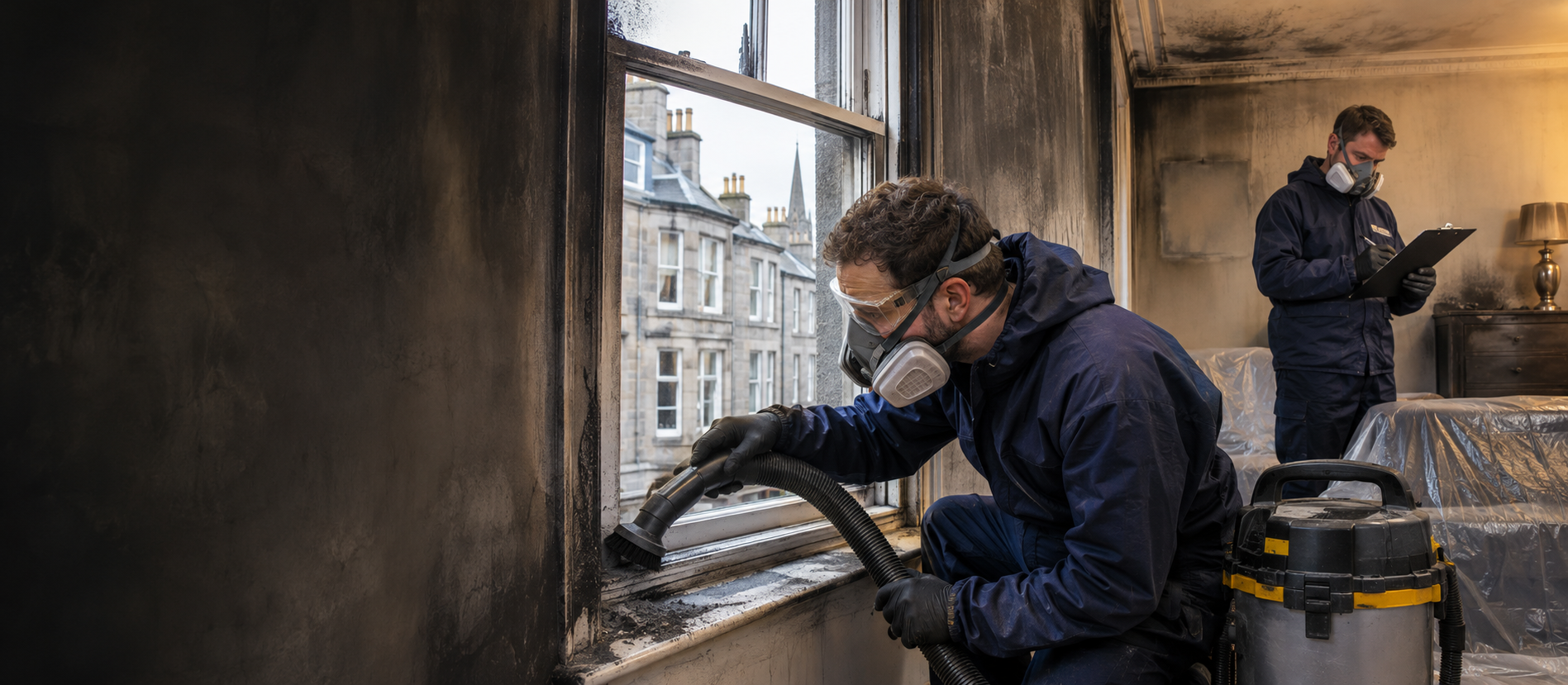
Fire and smoke damage cleaning in Aberdeen and Aberdeenshire
A fire can leave a property with several different forms of damage in the same room. Soot may settle on a window frame, oily residue may adhere to a painted wall, extinguishing water may soak a floor and an odour may remain in soft furnishings long after the visible marks have gone. Nova Clean Aberdeen helps owners, managing agents and businesses plan the cleaning stage once the emergency response is over and the property has been declared safe to enter. We discuss the affected rooms, the materials present, access arrangements and the result you need before proposing a scope of work.
Our enquiries cover Aberdeen city and surrounding Aberdeenshire communities, including Rosemount, Ferryhill, Torry, Bridge of Don, Dyce, Cove Bay, Westhill, Portlethen, Stonehaven, Inverurie and Ellon. Each incident is different. A small kitchen fire in a granite tenement requires a different survey from smoke migration through a modern office or a warehouse affected by a neighbouring unit. A clear assessment prevents a superficial clean from hiding residue that later reappears.
Begin with a safe, authorised assessment of the affected property
Cleaning should start only after the fire and rescue service, building professionals and any relevant utility providers have addressed immediate hazards. Do not switch on damaged electrical equipment or enter a room with uncertain structural stability simply to inspect the soot. If the premises are managed, establish who can give access and authorise the work. The insurer or loss adjuster may also need photographs and an agreed record before damaged items are moved.
We ask whether the fire is fully extinguished, where it began, which rooms were directly exposed and whether smoke travelled through corridors, stairwells, ventilation or shared voids. We also ask about extinguishing water, boarded openings, electricity, heating, asbestos concerns in older materials and any part of the building that has been restricted. An initial discussion can help define a survey, but photographs alone cannot reveal what has penetrated behind a fitting or into a porous surface.
What soot deposits reveal about the cleaning sequence
Soot is not one uniform dust. Fine dry deposits may sit lightly on cool surfaces; heavier or oily residues can smear when wiped. Smoke can condense on windows, ceilings, metal fittings, painted joinery and the colder edges of a room. A technician first identifies the deposit and the surface beneath it, then tests an appropriate method in a discreet area. Applying water or a general household cleaner immediately can drive material into a porous finish and make later restoration harder.
Controlled dry removal, suitable filtration and careful containment may precede any wet cleaning. Work normally moves from less contaminated zones toward the main area of damage and from high surfaces down to floors. Tools and cloths need to be managed so residue is not transferred to clean rooms. We explain which surfaces can be cleaned, which require specialist restoration and which may need replacement after an independent building or contents assessment.
Protecting Aberdeen granite, plaster and older interior finishes
Aberdeen properties include granite façades, traditional tenements, cornices, timber sash windows, painted plaster, modern composite surfaces and a wide range of floor finishes. The same chemical or level of abrasion is unsuitable across all of them. Decorative plaster can be delicate even when the underlying wall appears sound. Historic paint layers, stone and timber can react differently to moisture and cleaning agents. We discuss any conservation restrictions or fragile surfaces before a treatment is agreed.
Residue on exterior masonry may be visible around a vent, window or entrance, but exterior work involves separate access and substrate considerations. Harsh pressure can damage pointing or drive water into the building. Interior stone or porous grout can retain staining, so a small test and realistic expectation are more useful than a promise of complete removal without inspection. Where soot has penetrated a finish, cleaning alone may not restore its appearance.
Smoke odour needs a source-led plan
An odour can linger because residue remains in a cavity, on a surface or in an item of fabric. Covering it with fragrance does not remove the source. Once visible deposits are addressed, we consider upholstery, curtains, carpets, unfinished timber, cupboards, ventilation components and other places where smoke may have settled. An odour treatment should follow cleaning and the assessment of materials that cannot be salvaged. We will not describe one treatment as a guaranteed cure for every building.
The nature and duration of the fire, ventilation during the incident and the time before cleaning all affect the outcome. A property with a small contained incident may need targeted cleaning, while pervasive smoke through several storeys may involve separate contents, ventilation and building contractors. The proposal should state which areas and items are included, how success will be evaluated and what might still require repair or replacement.
Contents, documents and possessions after a fire
Families often need access to photographs, records, keys and essential belongings before clearance begins. We ask you to identify items that must not be moved or discarded and who will make decisions about damaged contents. A room-by-room inventory can separate items for assessment, items needing specialist treatment and material authorised for disposal. Electrical appliances, food, medicines and personal protective items should be reviewed by the appropriate qualified people rather than assumed safe after an exterior wipe.
For occupied homes, temporary storage and protected pathways may help prevent clean belongings from being contaminated during work. In a tenement or block, communal access, stairs and neighbours also matter. We discuss practical routes for equipment and waste and whether the managing agent needs to approve the timing. We do not dispose of sentimental belongings or documents simply because they have an odour or a surface mark.
Water and extinguishing residue can change the priorities
Water used during firefighting can affect the structure and contents independently of the smoke. Wet insulation, flooring and wall cavities may need a drying and moisture assessment before decorative finishes are restored. Foam or powder deposits also require identification because an unsuitable cleanup method can spread them or damage a surface. We ask what was used, where it travelled and whether a drying contractor or surveyor is already involved.
Cleaning a visibly dry surface does not prove that the construction beneath it is dry. If moisture remains, it can undermine later cleaning and finishing work. We can coordinate the cleaning sequence with other appointed specialists, while making clear where their responsibilities begin. This is especially relevant in Aberdeen flats where fire water can affect the unit below or common spaces that have separate owners and insurers.
Commercial premises and business continuity
A fire in a shop, office, restaurant or light industrial unit raises access, stock and scheduling questions in addition to cleaning. The business may need to keep part of the premises closed while another area operates. We ask which routes remain in use, whether alarms and services have been checked, who controls isolation of equipment and what records are required for an insurer or landlord. The cleaning plan can then divide the work into manageable zones.
Food premises require special care around preparation equipment, stock and extraction systems. We distinguish surface cleaning from ductwork, equipment repair and food safety decisions made by the operator and relevant professionals. In offices, electronics and paper records may need specialist handling. An agreed sequence reduces disturbance to unaffected areas without suggesting that a rapid visual clean alone is enough for safe reopening.
How a quotation is built for the actual damage
There is no reliable flat price for every fire. The size and number of affected rooms, deposit type, access, height, surface fragility, contents volume, waste requirements, odour sources and availability of water and power all affect labour and equipment. A survey may be needed before a fixed quotation is sensible. We can explain provisional assumptions and request photographs to prepare the discussion, but a photograph cannot show every hidden deposit.
A useful written scope should identify the rooms, accessible surfaces, contents handling, proposed cleaning stages and exclusions. It should say whether waste removal, specialist restoration, drying, painting, repairs or ventilation work are included. If priorities change when a concealed area is opened, a revised scope should be agreed before additional work. This clarity matters to an owner making decisions and to a manager reporting costs to several stakeholders.
Practical information to send with your enquiry
Please tell us the postcode, property type, approximate floor area, location of the fire and the rooms where smoke or extinguishing water travelled. Mention when the incident happened, whether the building is safe to enter, who can authorise access, any insurer or surveyor involvement and the deadline you are working toward. Photographs of the general conditions and the most affected surfaces are helpful where it is safe to take them. Do not disturb damaged material just to obtain a close image.
If you have listed items to retain or rooms that must stay closed, tell us at the outset. For a business, provide operating hours and a contact who understands the building services. For a tenement, explain whether communal areas or neighbouring flats were affected. We will use these details to discuss the next practical step, the need for a visit and the boundaries of a cleaning proposal.
Ventilation, hidden deposits and the limits of surface cleaning
Smoke follows pressure changes and air movement rather than stopping at the doorway of the burnt room. It can pass through a landing, enter a service cupboard or leave a light film around a ventilation grille in a room that otherwise looks untouched. We therefore discuss the route of smoke through the property and whether a building manager has details of shared ventilation. Removing a grille or opening a sealed void may need the permission and involvement of a suitably qualified contractor. The cleaning quotation should not imply that inaccessible areas have been treated.
Filters and air handling components can retain residue. Their inspection, repair or replacement belongs with the person responsible for that system. We can clean accessible surfaces within an agreed scope and coordinate our work so that deposits are not immediately recirculated. If a smell returns after the visible rooms have been cleaned, the source needs further investigation rather than an automatic repeat of the same treatment.
What a careful handover should record
Before work begins, agree which rooms and surfaces are included and identify areas excluded because they are unsafe, inaccessible or reserved for another contractor. During the job, changes in condition should be discussed with the authorised contact. At handover, a record of the work performed, any limitations and remaining defects helps the next stage of restoration. A clean surface may still have cosmetic staining, heat damage or a finish that needs replacement. It is better to state that clearly than to conceal it under a vague description of completion.
For rented or managed property, this record can help an owner, tenant, agent and insurer understand the difference between cleaning, repair and replacement. Where contents are moved, the agreed inventory and disposal decisions should remain traceable. The final walkthrough is also an opportunity to identify any remaining odour and decide whether it comes from an item, a building material or an area outside the original scope.
Local support from first discussion to property handover
Nova Clean Aberdeen aims to make a difficult recovery stage more understandable. We explain what has been observed, what is proposed, what cannot yet be judged and which decisions remain with the property owner or another appointed specialist. We can plan around property access in Aberdeen and nearby Aberdeenshire towns, subject to availability and the nature of the work. The focus is careful handling, suitable methods and a record of the agreed scope.
Call 0845 52 805 20, email